Every Decision You Make Without AI Is Now a Gut Gamble
Steve Jobs didn't trust touchscreens.
Well, that's not quite right. Steve Jobs championed touchscreens while most of Apple internally thought he was insane. User research said touchscreens felt wrong. Experience said they wouldn't work. And Jobs said: do it anyway.
Here's what most people miss about that story: Jobs didn't ignore the criticism. He absorbed it, then built around it.
When you press a key on your iPhone keyboard, you don't actually get the character under your finger. You get the character slightly above it. Apple patented this. They discovered that touchscreen typing mechanics differ fundamentally from physical keyboards, and they engineered the software to compensate. That innovation exists because Jobs took the doubters seriously enough to solve for their objections.
Great executives don't dismiss data. They triangulate it against instinct.
And until now, most executives couldn't afford to do this properly.
The Hidden Cost of Every Corporate Decision
Let's walk through how decisions actually get made in organizations.
Phase one: data and context gathering. You and your team collect whatever's readily accessible. Employee counts, average salaries, last quarter's sales figures, market positioning. Internal context that only your people would know.
Phase two: research. You start noticing gaps. To make an informed call, you need data that doesn't live in your systems. So you hire consultants. Commission surveys. Purchase third-party datasets. This is where the budget starts bleeding.
Phase three: analysis. Now you're merging sources, normalizing metrics, making sure you're comparing apples to apples. GDP versus GDP per capita. Revenue versus profit margin. This takes time and expertise.
Phase four: synthesis. You step back from the numbers and ask: what does this actually tell us? What patterns emerge? What should we do?
Phase five: scenario planning. If you're lucky, synthesis leads directly into "here are our options with their respective tradeoffs." If you're like most teams, synthesis reveals more gaps, and you cycle back to phase one. Then two. Then three. Again.
Finally: executive decision. Someone looks at all this work and makes a call.
Here's the dirty secret: most organizations skip 80% of this process.
Not because they don't want rigor. Because rigor costs a fortune.
The Economics Just Flipped
In a previous piece, I argued that the cost of labor is trending toward zero while the quality of labor is skyrocketing. If you haven't internalized what that means for decision-making, you're already behind.
The reason CEOs get paid enormous sums isn't primarily for their judgment. It's because they have to make consequential calls with limited data. Good executive instinct is really just pattern recognition honed under conditions of information scarcity. When research costs $50,000 and takes six weeks, you learn to trust your gut. You have to.
That constraint is dissolving.
When AI can gather context, conduct research, analyze data, synthesize findings, and generate scenario models in hours instead of months, and for pennies instead of thousands, the calculus changes completely. Suddenly, the competitive advantage isn't "make faster gut calls." It's "make better-informed calls, faster."
Every decision can now receive the analytical treatment that used to be reserved for board-level strategic pivots.
The New Decision Framework
I'm not suggesting we abandon executive instinct. That sharpened compass, built over years of pattern recognition and hard-won lessons, remains valuable. What I'm suggesting is a marriage: gut instinct wedded to data-backed validation.
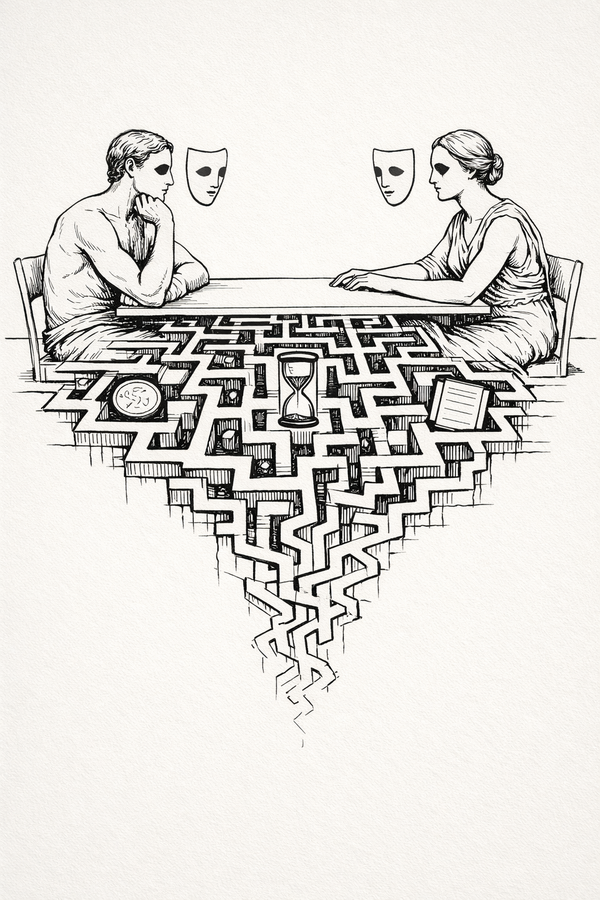
Because here's what every honest executive knows: when your instinct points one direction and the data points the opposite way, you pause. You don't have to change your mind. But you recalibrate your confidence. You prepare for the objections. You think harder about what you might be missing.
The worst outcome isn't being wrong. It's being confidently wrong without ever knowing you had the option to check.
With AI-assisted research, checking becomes trivially cheap. The question is no longer "can we afford to validate this decision?" The question is "can we afford not to?"
The Calibration Loop
Here's what most people miss about data-informed decision-making: the value isn't just in making the current decision better. It's in making you better.
When you make a gut call and then check it against AI-gathered research, one of two things happens.
Either the data supports you, and you gain justified confidence in your pattern recognition for similar future decisions. Or the data contradicts you, and you get to examine why. Maybe your instinct was off. Maybe the data is incomplete. Either way, you learn something about the gap between your mental model and reality.
This feedback loop is the real prize. Not any single decision, but the continuous refinement of your internal compass. The ability to know, with increasing precision, when to trust yourself and when to dig deeper.
Most executives never get this calibration. The decisions ship too fast, the feedback arrives too late, and the data was too expensive to gather in the first place. They're flying by instruments they can't verify.
That era is ending.
What Changes Now
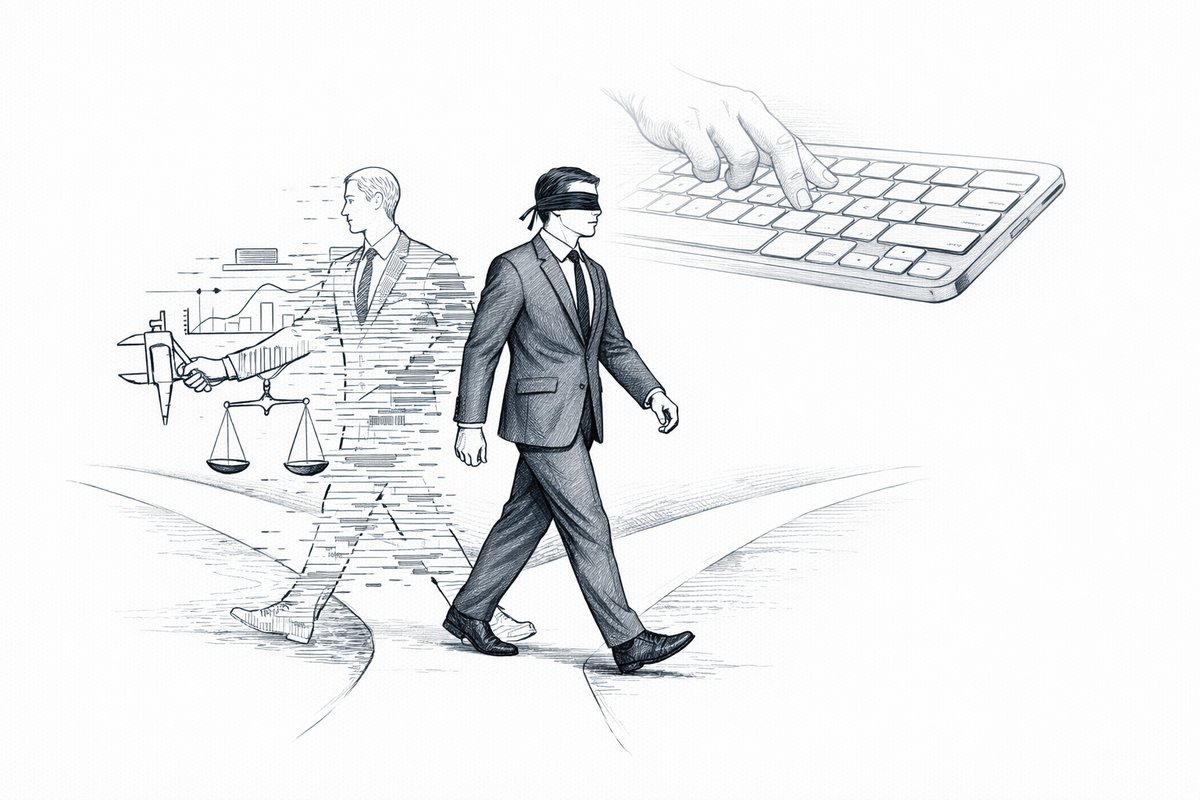
Going forward, it's becoming inconceivable to me why anyone would make a significant decision without at least asking AI to gather the relevant data first.
Best case: the research confirms your instinct, and you proceed with earned confidence.
Worst case: the research contradicts your instinct, and you get to think about whether the data is right or whether your gut knows something the numbers can't capture.
Both outcomes are wins. Both make you sharper.
The future of work isn't humans versus machines or instinct versus data. It's finally having both in the same room, at the same time, for every decision that matters.
The only question left: how long will you keep making gut gambles when you could be making informed bets?