Three Principles for Capturing AI's Full Utility

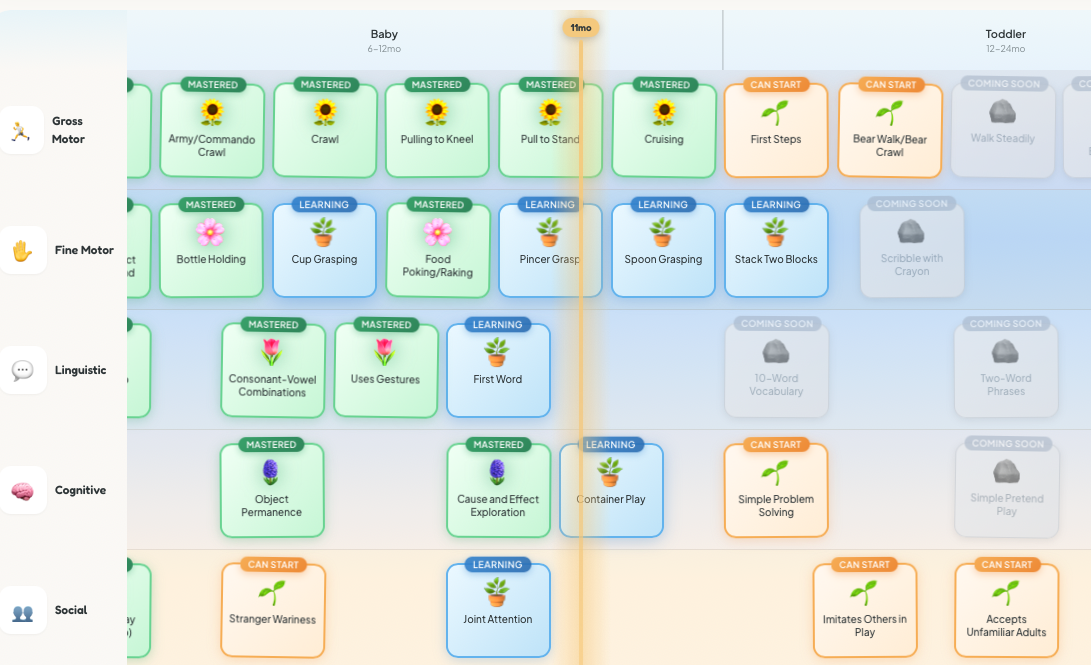
2025 was the year I stopped writing code and started orchestrating it. The productivity delta wasn't marginal—it was categorical. By treating AI as a capable operator rather than a sophisticated autocomplete, I shipped: a family-specific child development tracker, an AI-driven workout system that accounts for schedule conflicts and injury history, a caloric tracking workflow that reduced my body fat by six percent without muscle loss, a complete startup website with no designer or developer involved, and multi-hundred-page reports with proper structure and linked references.
The unlock wasn't just the technology. It was a shift in operating posture. Three principles drove most of the leverage: delegation, context, and compound engineering.
Delegation: From Doing to Orchestrating
The old model worked like this: you gather requirements, set constraints, allocate budget, make decisions, and write the product requirements document (PRD). For executives, this front-loaded work is painful. A well-crafted PRD demands decisions with incomplete information, research to justify gut instincts, and reputation on the line. Once the team executes, you realize you forgot something, mis-specified something, or your assumptions shifted during development. Back to the PRD. The cycle repeats until you ship or exhaust yourself.
AI inverts this sequence.
Rather than starting with the PRD yourself, delegate even the writing of the PRD. Point the AI at your existing context—documents, repositories, communication threads—and ask it to draft the requirements. Your role shifts to shaping and finalizing, not originating. Work that took hours now takes under one.
This mindset extends far beyond documents. Before starting any task, the first question becomes: how would I delegate this to someone capable, knowledgeable about me, and fluent in any language or codebase?
Some examples from practice:
- Speaker profile: Rather than writing my own bio, I delegated deep research across LinkedIn, Google Scholar, and publication records. The AI assembled a profile more comprehensive than what I would have written manually.
- Social media editing: Instead of composing posts from scratch, I provide raw material and the intended outcome. The AI composes viable drafts from existing content.
- Video storyboarding: Creative direction isn't my strength. But bouncing ideas with AI and delegating storyboard drafts means I focus on shooting, not concepting.
- Data extraction: Some platforms lack export APIs. Using browser automation, AI can systematically traverse workout logs, activity records, or any structured data—work that would be mind-numbing for a human but trivial for an agent that doesn't get bored.
The bottom line: your default instinct before doing anything should be how do I delegate this?
Context: The Enabling Constraint
Delegation without context produces generic output. The differentiator is your accumulated context—requirements, constraints, decisions, preferences, infrastructure—that makes AI output fit your specific situation.
Without context, you'll spend most of your AI time re-explaining who you are, what you've decided, and why. This defeats the leverage.
The solution isn't waiting until you have perfect context. It's capturing context as you work. Every decision you make going forward should be stored in an AI-consumable format. Every implicit choice—the ones you think through and act on without recording—needs to become explicit.
Version control matters here. When AI consumes your context, it can read not just the current state but the history of how your decisions, constraints, and requirements evolved. Git is natural for code, but the principle applies to any structured storage: meeting notes, decision logs, design documents.
What belongs in context? Everything relevant to decisions you'll make:
- Professional constraints and roadmaps
- Family logistics and timelines
- Technical stack and infrastructure choices
- Past decisions and their reasoning
- Current projects and dependencies
The platform determines which connectors work—some integrate cleanly with one AI system but not others. The principle remains: externalize your operating context so AI can consume it without repeated explanation.
Compound Engineering: Problems That Solve Future Problems
Pre-AI engineering didn't compound in a meaningful sense. Building a first bridge teaches you about suppliers, logistics, stress testing. Building a second bridge encounters the same categories of problems. Experience helps you decide faster, but the work itself takes roughly the same duration.
Compound engineering changes this: every problem solved should make future problems faster to solve.
If you've thought through server infrastructure once—architecture decisions, security patterns, deployment flows—that context persists. When designing a new application, the same infrastructure context acts as guardrails, informing test suites and architectural constraints without starting from zero.
This compounds off the first two principles. Delegation produces more context than working alone ever could. More context means future work converges faster on your actual requirements. Each cycle deposits artifacts that accelerate the next.
The mechanics of compound engineering deserve deeper treatment than this article provides. The core insight: structure your work so that outputs become inputs. Documents become templates. Decisions become constraints. Code becomes scaffolding. Nothing is built once and forgotten—everything compounds.
The Shift
These three principles—delegation, context, compound engineering—form an operating posture rather than a toolkit. The technology will continue advancing. The leverage comes from positioning yourself to capture that advancement: treating AI as an operator worth delegating to, accumulating context worth consuming, and structuring work so every problem solved pays dividends on future problems.
The productivity gains from 2025 weren't about working harder or learning new tools. They came from changing what work means in the first place.